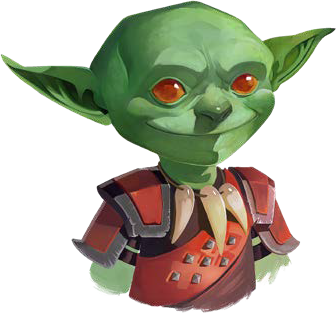
Helba Bumblebrasher
The Bumblebrasher chieftain — the one who holds the tribe together, who saw what Warbal was before Warbal did, and who was still on her feet after Calmont's knife and a Cinderclaw siege.
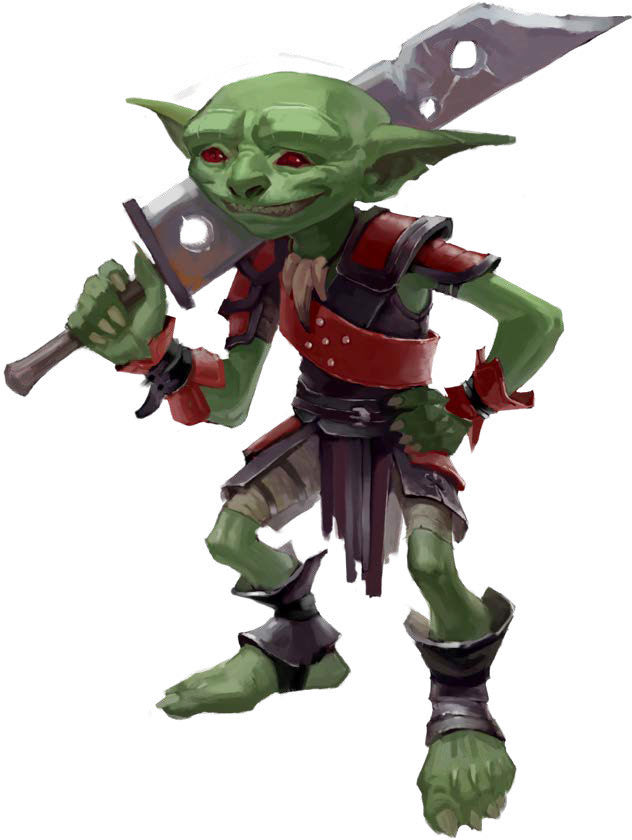
Helba is not the goblins' biggest or loudest member. She is their chieftain, which is a different thing, and she carries it the way a chieftain does: in posture, in the way she paces to think, in the fact that when she speaks her tribe goes quiet.
The party first saw her in a halfling's headlock on the citadel battlements, a knife at her ear, her small frame rigid with the effort of not giving Calmont the satisfaction of visible panic. She was afraid. She did not perform calm. She just kept her eyes open and waited for her moment.
The Chieftain
The Bumblebrashers have had chieftains before Helba and will have them after. By tribe reckoning, nobody has been keeping count. What distinguishes Helba is not a clean succession or a decisive victory but a quality of attention: she notices what her people need before they know how to ask for it.
The clearest evidence of this is Warbal. Where others saw a morose young goblin who read too much and never quite fit, Helba saw someone whose gifts the tribe simply had no outlet for. She went to Breachill herself to fix that. She leveraged a half-orc bard named Torash, who still made the occasional trip to the citadel and knew the right people. She sat in a human council chamber and made a case. The ambassadorship she arranged was created specifically for Warbal, funded by the council, and entirely Helba's idea. She went back to the tribe and didn't make much of it.
This is characteristic. Helba does not advertise her judgment. She uses it.
Hellknight Hill
When the Cinderclaws came, the tribe ran. That is not a failure of leadership — it is the correct call when cultists with dragon monsters move into your basement and threaten to peel and eat you. Helba got her people to the battlements. She kept them together in the days that followed, rationing what food they had, catching rainwater, maintaining enough order that nobody broke and did something fatal.
Then Calmont used her as a hostage, and the party arrived.
She did not wait to be rescued. When Calmont's attention shifted, she twisted free. It cost her nothing but the timing. She was back among her people before the last of the ropes went on Calmont's wrists, adjusting her disheveled clothes and addressing the adventurers with the composed authority of someone who has decided this is the point where things start going better.
"You are true heroes, friends. The Bumblebrashers owe you everything."
She meant it. She also immediately began assessing what needed to happen next.
The Citadel
The question of where the tribe would live after the Cinderclaws were cleared was not, for Helba, a complicated one. The citadel was their home. It had been for years. She wanted it back.
When Trisiel and Theo gave permission for the Bumblebrashers to remain, something moved in her face that she did not have a word for. "You — you mean it?" And then she pulled herself back into chieftain shape and started working through the logistics.
She negotiated the tribe's role clearly from the beginning. They would guard. They would earn their place. They would not hide in walls hoping bad things went away. When Nadira proposed training the Bumblebrashers as a formal garrison, Helba received the offer the way she receives things that confirm what she already believed: with a short, explosive bark of satisfaction, then immediately telling her people to get ready.
"Yes! Ack! Helba knew! Helba knew heroes not just rescue — they build!"
She accepted Warbal's formal diplomatic language when Warbal stepped in to respond. She let Warbal be the diplomat. The chieftain does not need to be everything.
When the party returned with One-Eye Amnin and the Cypress Point survivors in tow, Helba was at the citadel when they arrived. She listened to William's explanation. She looked at Amnin once. "Cells," she said. "We'll watch them." A beat. "They eat what we eat." It was not generosity. It was the citadel's operating standard, stated plainly so there would be no argument about it later. William found her before the evening was over, and told her directly that if it came to a choice between her people and the prisoners, the prisoners were expendable. Something in her expression shifted, just slightly, toward approval. She didn't say anything. She didn't need to.
When it became clear the party was going into the Abyss to retrieve Renali's soul, Helba threw the Bumblebrashers into the citadel's defensive preparations without hesitation. Three days to barricade corridors, drill the goblin archers for massed fire from elevation, coordinate with Sera Voss and her Crusaders. On the eve of departure she was found on the upper battlements sharpening a blade that didn't need sharpening, which is what she does when she's thinking and does not want anyone to know she's thinking.
Frazzle found her there the night before the portal opened. She did not perform composure. She told him the truth: this hole went somewhere that didn't want him back. And then she said the thing she had been carrying: come back. That was all. He promised. She closed her claws around his fingers for one breath, then released him and told him to go sleep — "Tomorrow is a bad day for tired goblins." When the portal opened the next morning, she was on her crate on the wall, watching the courtyard, blade at her hip. She holds the citadel in his absence, and the soup will be hot when he returns.
Voice
Helba's speech is terse, hoarse — "like a toad with gravel in its throat," one observer might say — and punctuated by "Ack!" at the joints of her sentences, a marker of emphasis or exasperation or both. She refers to herself by name in moments of full commitment. She hops onto elevated surfaces when she has something important to say. She paces when she's thinking.
She can be funny. Her send-off to Frazzle before the journey to Elidir — pacing a barrel, arming him with a stone whistle shaped like a starburst, advising him not to look hungry and not to sit on the powder — had the quality of someone who has thought carefully about the things that go wrong and still couldn't help making it a little bit a performance. "Stars got weird sense of humor. Ack! Maybe they think goblins already loud and noisy, so good match!" And then, more quietly: "But Helba understands. Pulls are real. Even if they don't make sense."
She allows this kind of warmth in trusted company. With Falwan's speech about allies and greater evils, she did not deflect or perform. She received it, answered it honestly out of her own hard history, and committed to something: "If we can rebuild here, we'll be the kind of neighbors you'd want, Falwan. Not ones who hide when danger comes knocking. But ones who knock back harder."
She means what she says. The tribe knows this. It is most of why they follow her.
Statistics
AC 17 | HP 36 | Speed 25 ft.
Fort +7, Ref +7, Will +6 | Perception +7
Str +2, Dex +3, Con +2, Int +0, Wis +1, Cha +2
Skills Athletics +6, Intimidation +6, Nature +5, Society +3, Survival +7
Languages Common, Goblin
Items Dogslicer, chieftain's cleaver, studded leather armor, tribe fetish
Goblin Scuttle ↺ Trigger: a goblin ally ends a move action adjacent to Helba. Effect: Helba Steps.
Rally Cry ◆ Helba lets out a short bark of command. All Bumblebrasher goblins within 30 feet gain a +1 circumstance bonus to attack rolls until the start of her next turn.